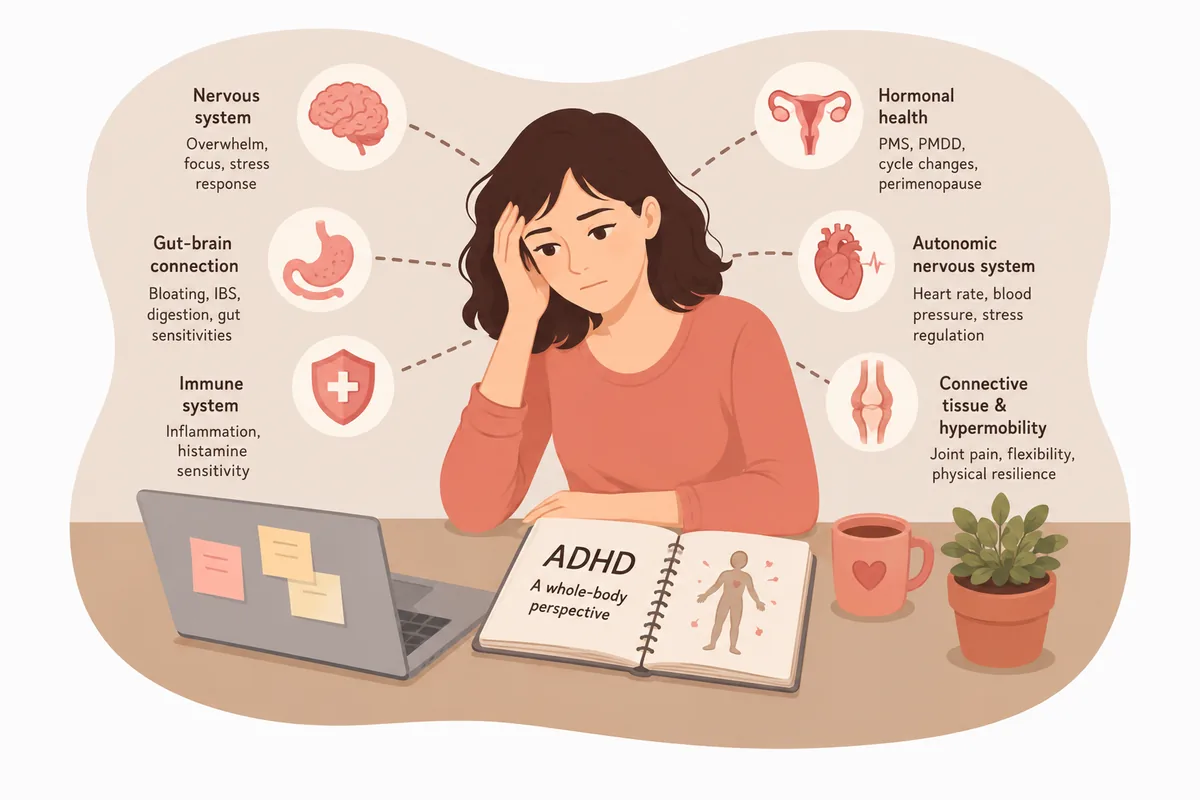
Digestion Is About More Than Food: What Else Could Be Affecting Your Gut?

Many clients come to my nutrition practice experiencing bloating, abdominal discomfort, constipation, diarrhoea or indigestion. Often, they arrive with a list of foods they believe they cannot tolerate, or the results of a commercial food intolerance test suggesting they should avoid certain ingredients.
And sometimes, food really is part of the problem. We all respond differently to what we eat, and some foods may genuinely trigger symptoms in certain people.
But one thing I have noticed over the years is that digestive health is about much more than what is on our plate.
How we eat, when we eat, our stress levels, sleep, movement, hormonal changes, and even how we recognise our body's signals can all affect how comfortable our digestion feels.
Before removing more foods from our diets, I think it's worth looking at the bigger picture.
Are food intolerances always the explanation?
First, it's important to distinguish between food allergies, food intolerances and conditions such as coeliac disease.
A food allergy involves the immune system and can sometimes cause serious, potentially life-threatening reactions. Depending on the circumstances, allergies can be investigated through validated testing alongside a detailed clinical history.
Coeliac disease is different. It's an autoimmune condition triggered by gluten, and people with a confirmed diagnosis need to avoid gluten strictly. Importantly, testing should take place while gluten is still being consumed, as removing it beforehand can affect the results.
Food intolerances are generally different from allergies and do not involve the same immune mechanisms. Lactose intolerance, for example, can be investigated using a hydrogen breath test or a structured dietary approach.
However, many commercially available food intolerance tests, particularly those measuring food-specific IgG antibodies, are not scientifically validated for diagnosing food intolerances.
This matters because these tests can lead people to unnecessarily eliminate multiple foods, sometimes making their diets more restrictive and stressful without addressing the actual problem.
I never dismiss someone's symptoms or their experience with particular foods. But I do encourage clients to explore possible patterns before assuming that a long list of foods needs to disappear from their diet.
Digestion begins before your first bite
We often think digestion starts in the stomach, but the process actually begins much earlier.
Have you ever noticed your mouth watering when you smell something delicious cooking?
The sight, smell and anticipation of food can stimulate the nervous system to prepare the digestive tract for a meal. This is known as the cephalic phase of digestion.
Once we start eating, chewing breaks food into smaller pieces and mixes it with saliva. Saliva contains an enzyme called amylase, which begins breaking down starch.
Yet modern life does not always encourage us to give this process much attention.
We might eat lunch at our desks, rush through breakfast, scroll through our phones or barely notice what we are eating.
Eating quickly can also mean swallowing more air, which may contribute to bloating or belching in some people.
I am not suggesting we need to count every chew or turn eating into another task to get right. Even with a smoothie or soup, taking time to enjoy it rather than gulping it down can encourage a more relaxed eating experience.
Sometimes, simply sitting down, slowing the pace and paying attention to a meal is a useful place to start.
Your gut and brain are constantly communicating
Our digestive system and brain are connected through a complex network of nerves, hormones and chemical signals, often referred to as the gut-brain axis.
This relationship helps explain why stress can have such a noticeable effect on digestion.
Think about our ancestors facing an immediate threat, such as a dangerous animal. The body's stress response helped prepare them to react quickly.
Today, our stressors are usually different. A demanding job, financial worries, family responsibilities, constant notifications or rushing between commitments can all keep us feeling under pressure.
Our stress-response systems still react to perceived threats, even when we are not in physical danger.
Stress can change how quickly food moves through the digestive tract, influence digestive secretions and increase sensitivity to sensations from the gut.
For some people, this contributes to constipation. For others, it may mean urgency, diarrhoea, cramps or bloating.
And the relationship works both ways. Digestive discomfort can itself become a source of anxiety, creating a difficult cycle.
This doesn't mean digestive symptoms are imaginary or simply caused by stress. The gut-brain connection is a real biological process.
It's one reason I often explore stress, sleep and emotional wellbeing alongside nutrition when working with clients.
When we eat can matter too
Another pattern I frequently see is irregular eating.
Some people skip breakfast, work through lunch and then find themselves extremely hungry in the evening. Others eat their main meal very late because that's the only time they can sit down.
There is no perfect eating schedule that suits everyone, but regular meals can help establish a more predictable routine and prevent us from becoming so hungry that we eat very quickly or consume a particularly large meal.
Our digestive system also follows daily rhythms, influenced partly by our internal body clock.
For people experiencing reflux or indigestion, leaving approximately two to three hours between a substantial evening meal and lying down may help reduce symptoms.
That does not mean digestion stops when we sleep, or that eating after a particular time is automatically unhealthy.
It's about finding a rhythm that works with your lifestyle and noticing whether meal timing affects how you feel.
Just a bit of movement can go a long way
Many of us spend much of the day sitting, often moving directly from our desks to the sofa.
Regular physical activity supports general health and can help maintain healthy bowel function.
One simple recommendation I often make is to include some gentle movement after meals.
This does not need to mean a workout. A ten-minute walk, tidying the kitchen, doing some light household chores, or simply getting up from your desk can be a practical starting point.
Walking after meals can also help regulate blood glucose levels, while spending time outdoors may benefit our mood and stress levels. Although the effects on digestive symptoms will vary from person to person, gentle movement is a simple way to support our overall health and wellbeing.
The key is consistency rather than intensity. Gentle movement is often more comfortable than vigorous exercise immediately after eating.
Why digestion can change throughout a woman's life
Hormones are another important part of the picture, particularly for women who notice digestive symptoms changing throughout their menstrual cycle.
During the second half of the cycle, after ovulation, progesterone levels rise. Progesterone may influence gastrointestinal motility, and some women experience more constipation, bloating or fullness during this phase.
Around the start of menstruation, progesterone levels fall, and the body produces prostaglandins, substances involved in triggering uterine contractions.
Prostaglandins can also stimulate the bowel, helping explain why some women experience looser stools, diarrhoea or abdominal cramps during their period.
These changes can be particularly noticeable in women with irritable bowel syndrome (IBS).
What about perimenopause and menopause?
During perimenopause, oestrogen and progesterone levels fluctuate, sometimes considerably.
Some women notice changes in bowel habits, bloating or digestive comfort during this transition. Hormonal changes may play a part, but so can disrupted sleep, increased stress, changes in physical activity and other health factors.
After menopause, lower oestrogen levels may also be relevant, although the relationship between menopause and digestive symptoms is complex and still being investigated.
It's important not to automatically attribute new digestive symptoms to hormones, particularly persistent or worsening bloating, abdominal pain or changes in bowel habits.
Conditions such as endometriosis, coeliac disease, thyroid disorders and other gastrointestinal or gynaecological problems may also need consideration.
Understanding hormonal patterns can be helpful, but it should not replace appropriate medical investigation.
ADHD, body awareness and eating patterns
Another connection I find particularly interesting is the relationship between ADHD and eating habits.
Some people with ADHD experience differences in interoception, our ability to recognise internal signals such as hunger, fullness, thirst and the need to use the toilet.
In my practice, I have noticed how this, alongside difficulties managing time, planning meals or switching between tasks, can sometimes contribute to long gaps without eating, followed by eating quickly or consuming a large meal later in the day.
Some people also rely heavily on coffee to get through busy mornings, which may aggravate reflux or bowel symptoms in those who are sensitive to caffeine.
These patterns are not universal, and ADHD does not automatically cause digestive problems. But recognising them can help us find practical strategies that work with someone's brain rather than against it.
I have explored this in more detail in my article, ADHD and Eating: The Patterns I See in Women (and What Actually Helps).
Before cutting out more foods, look at the bigger picture
If you regularly experience digestive discomfort, it can be tempting to search for the next food to eliminate, supplement to try, or test to purchase.
But sometimes the most useful starting point is to ask a few different questions:
- Am I eating regularly, or going for long periods without food?
- Do I tend to rush through meals or eat while distracted?
- Have I noticed a connection between stress and my symptoms?
- Do my symptoms change throughout my menstrual cycle?
- Am I getting enough sleep and regular movement?
- Could caffeine, medication or supplements be contributing?
A simple food and symptom diary can help identify patterns, especially if it includes more than just what you have eaten.
Of course, persistent, unexplained or changing digestive symptoms deserve medical attention. Symptoms such as blood in the stool, unexplained weight loss, persistent vomiting or significant abdominal pain should not be managed through dietary changes alone.
And if you are considering removing gluten, it's worth speaking to your GP about coeliac testing first.
Ready to feel more comfortable with your digestion?
Digestive symptoms can affect much more than physical comfort. They can influence our confidence, mood, social life and overall quality of life.
As a Registered Nutritional Therapy Practitioner, I take a personalised approach, looking not only at nutrition but also at eating patterns, stress, sleep, movement, hormonal health and the gut-brain connection.
I aim to help you understand what may be contributing to your symptoms and explore realistic, sustainable changes, without automatically turning to restrictive diets or unnecessary testing.
You can find out more about my approach on my Gut & Digestive Health service page.
If digestive issues are affecting your daily life and you would like to explore how I might support you, I offer a free, no-obligation 20-minute discovery call.
Karine x